
Buying guide
Best Foam Rollers for Home Recovery
Foam rollers look interchangeable, but firmness, texture, length, diameter and powered vibration change the experience considerably. The firmest roller is not automatically the best one.
By HealthyLivingHub Editorial Team
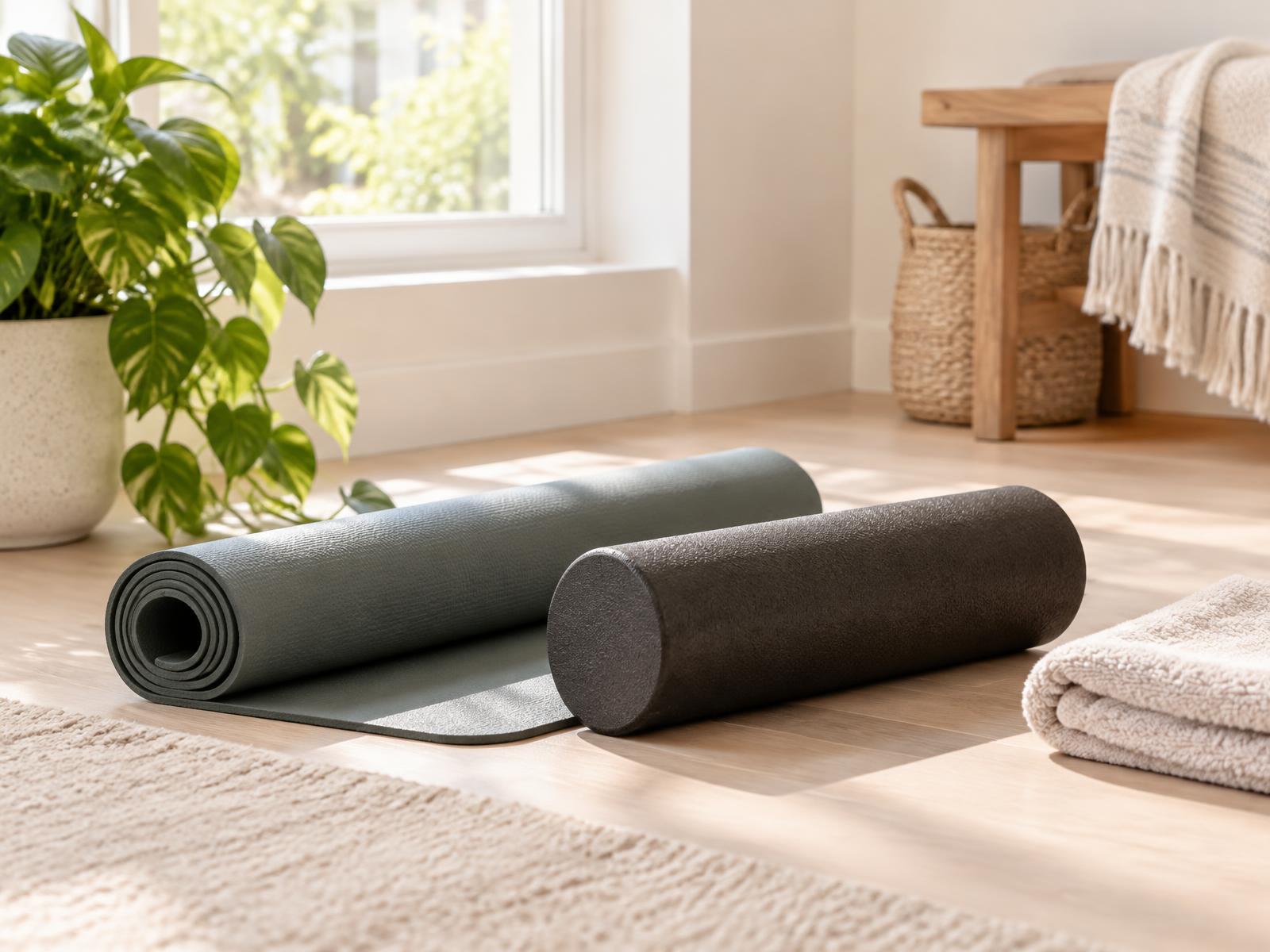
A foam roller is one of the simplest pieces of equipment you can keep at home. It is also one of the easiest to buy badly, because two cylinders that look alike can feel completely different underneath you.
Firmness, surface texture, diameter, length, construction, and whether the roller is powered all change the experience. None of those variables has a single correct answer, and the most aggressive roller is not automatically the most useful one.
This guide compares five rollers chosen to represent genuinely different preferences and use cases. Recommendations are based on current manufacturer specifications, product design, and practical fit. HealthyLivingHub has not personally tested these products. Foam rolling here means the ordinary fitness sense of the word, consistent with our Recover & Recharge pillar, not medical treatment.
Our picks at a glance
Best Overall
TriggerPoint GRID 1.0 Foam Roller
A 13-inch hollow-core roller with an EVA foam surface and the patterned GRID surface.
Best for Beginners and Gentler Rolling
A deliberately soft-density EVA roller available in several lengths and profiles.
Best Deep-Texture Roller
A distinctive bumped surface for people who specifically prefer concentrated pressure.
Best Vibrating Foam Roller
A rechargeable roller with five vibration intensity settings and a wave-textured surface.
Best Simple High-Density Roller
Amazon Basics High-Density Foam Roller
A plain smooth cylinder for people who want no texture, no core and no electronics.
How we selected these foam rollers
These are research-based recommendations drawn from current manufacturer documentation. We did not use these rollers, produce test results, or assign numerical scores.
The factors we weighed were:
- firmness as described by the manufacturer
- surface texture and what it changes about contact
- length and the positions it makes possible
- diameter and how high it holds the body off the floor
- construction and durability claims
- portability and storage
- ease of positioning for common areas
- cleaning
- powered features where applicable, including charging
- practical fit for a specific kind of user
Manufacturers describe rollers in promotional language. Where they make physiological or therapeutic claims, we have not repeated those claims as our own conclusions.
Best Overall: TriggerPoint GRID 1.0 Foam Roller
The GRID 1.0 is the general-purpose answer: compact enough to keep in a corner or a bag, firm enough to feel substantial, and textured without being extreme.
TriggerPoint specifies a 13-inch length with a 5.5-inch diameter, an EVA foam surface over a hollow core, a water- and sweat-resistant surface that cleans with mild soap and water, a patterned GRID surface combining flat areas, tubular ridges and denser nodules, a hollow core rated to support up to 300 pounds, and a 1-year warranty.
Why we selected it
- 13-inch length is easy to store and to travel with
- hollow core holds its shape better than a plain foam cylinder over time
- patterned surface varies the contact rather than pressing evenly
- wipe-clean surface
- a sensible middle point between very soft and very aggressive designs
Tradeoffs
The firmer, textured feel is more pressure than some people want, particularly at the start. Its 13-inch length also means it does not support the whole spine lengthwise the way a 36-inch roller does.
Best for: Someone who wants one compact, versatile general-purpose roller rather than a very soft or highly aggressive specialty design.
Best for Beginners and Gentler Rolling: OPTP PRO-ROLLER Soft
The PRO-ROLLER Soft exists to make a point that the category often ignores: more pressure is not the goal, and a softer roller is a legitimate choice rather than a beginner's compromise.
OPTP describes the PRO-ROLLER Soft as a soft-density roller in durable closed-cell EVA foam, available in several configurations. The standard full-size version measures 36 inches long by 6 inches in diameter; OPTP also lists an 18-inch round version, a 36-inch half-round, a 36-inch by 4-inch lower-profile version, and a longer XL Soft at 46 inches. Rollers clean with a wet cloth and mild detergent.
The full-size 36-inch version is worth considering if you also want a supportive surface to lie along lengthwise for positioning and gentle exercise, not only for rolling.
Why we selected it
- soft density gives a gentler sensation than most mainstream rollers
- several lengths and profiles, including a half-round
- the full-length version supports the body along its whole axis
- durable closed-cell EVA construction
- straightforward to clean
Tradeoffs
People who prefer firm or concentrated pressure will find a soft roller unsatisfying, and a 36-inch roller takes noticeably more storage space than a 13-inch one.
Best for: Beginners, and anyone who simply prefers a gentler rolling experience. A softer roller is a preference, not a requirement for people new to rolling.
Best Deep-Texture Roller: RumbleRoller Original
The RumbleRoller Original is the opposite end of the same spectrum: a roller with pronounced raised bumps instead of a smooth or lightly patterned surface.
RumbleRoller specifies three sizes for the Original: full size at 6 inches in diameter by 31 inches long, mid size at 5.5 by 22 inches, and compact at 5 by 13 inches. The manufacturer describes the bumps as firm but flexible, designed to deflect rather than press flat, and notes that all materials are latex-free and independently lab tested under the Consumer Product Safety Improvement Act for lead and phthalates. A firmer XFirm version of the same design is sold separately.
RumbleRoller also makes an important distinction worth repeating in plain terms: how hard a surface feels and how far its texture reaches are two different things. Choosing a more aggressive texture is a preference and use-case decision, not a measure of effectiveness.
Why we selected it
- pronounced texture that concentrates contact rather than spreading it
- three lengths, from a travel size to a full-body 31-inch version
- flexible bumps rather than a rigid moulded surface
- latex-free materials with published safety testing
- a clear choice for people who already know they want this feel
Tradeoffs
The pronounced texture will not appeal to everyone and feels substantially different from a smooth cylinder. More discomfort is not evidence of a better result, and there is nothing medically superior about an aggressive roller.
Best for: Experienced users, or anyone who already knows they prefer a strongly textured rolling surface.
Best Vibrating Foam Roller: Therabody WaveRoller
The WaveRoller is a conventional rolling motion with a motor inside. That is the practical distinction, and it is the one worth making the decision on.
Therabody lists dimensions of 12.0 by 5.1 inches, a weight of 3.3 pounds, hypoallergenic high-density EVA foam, five vibration intensity settings, an internal 12V lithium-ion battery with a stated 180-minute battery life, a wave-textured surface, and a carrying bag and power adapter in the box. Warranty terms vary by region.
Therabody markets the product with recovery and performance claims. We are not repeating those as our conclusions. What the product objectively adds is adjustable powered vibration during rolling.
Why we selected it
- five selectable vibration intensities rather than a single setting
- cordless operation with a substantial stated runtime
- textured surface that adds traction during use
- compact 12-inch length
- carrying bag included
Tradeoffs
It costs considerably more than a conventional roller, needs charging, and at 3.3 pounds is heavier and more complex than a simple foam cylinder. Vibration is a feature, not a requirement.
Best for: Someone who specifically wants powered vibration built into a roller and is willing to pay for that feature.
Best Simple High-Density Roller: Amazon Basics High-Density Foam Roller
Not everyone needs a patterned surface, a hollow core or a battery. A smooth high-density cylinder does the basic job, and for many people that is the whole requirement.
This product is sold in multiple lengths and colours, and listings vary. Check the length, diameter and firmness described in the exact listing you are looking at rather than assuming all versions are identical.
Why we selected it
- plain smooth surface with nothing to learn
- several length options depending on the listing
- light and easy to move and store
- no charging, electronics or moving parts
- a reasonable starting point for someone unsure whether rolling suits them
Tradeoffs
The simple design lacks the varied texture, softer feel or powered features of the other recommendations, and a solid foam cylinder can compress over time with heavy use. Being the least complex option does not make it the best one for everybody.
Best for: Someone who wants a basic conventional foam roller with minimal complexity.
Understanding foam-roller firmness
Firmness describes how much the surface gives under body weight. Softer rollers generally produce a gentler sensation and spread contact over a wider area. Firmer rollers generally produce a more concentrated feeling of pressure.
Neither is automatically superior. The right firmness depends on the area you are working on, how much weight you put through the roller, and what feels manageable to you. A roller you find unpleasant is a roller you will not use.
Smooth versus textured rollers
A smooth cylinder distributes contact evenly along its surface. A textured roller concentrates contact at the raised areas and leaves space between them, which feels quite different even at the same firmness.
Preference, experience, the body area, and what you are using the roller for all influence which feels more appropriate. Many people end up owning one of each for different purposes, and plenty of people are perfectly well served by one smooth roller.
Choosing length and diameter
Length
Longer rollers, around 36 inches, give more surface area and more positioning options, including lying along the roller lengthwise. They also need more storage space. Shorter rollers, around 12 to 13 inches, are easier to store, carry and pack.
Diameter
Diameter affects how high the body sits off the floor and how easy it is to get on and off the roller. A 6-inch roller holds you higher and can feel less stable; a smaller diameter sits lower and often feels more controllable.
If you are also building a floor-based mobility routine, our article on stretching and mobility covers how rolling tends to fit alongside stretching.
What vibrating rollers add
A powered roller adds an adjustable mechanical vibration to the same rolling motion. Some people like the sensation and find it makes a session more comfortable to sustain.
What it does not do is make a roller necessary, medically or otherwise, and vibration is not an inherently superior feature. It costs more, adds weight, and needs charging. Buy it if the feature appeals, not because a conventional roller is somehow insufficient.
Practical use and safety
- begin with manageable pressure rather than as much as you can tolerate
- use slow, controlled movements
- follow the manufacturer's instructions for the specific roller
- do not assume that pain indicates a better result
- inspect the roller for cracks, tears or damage before use
- follow charging and care instructions for powered devices
- stop an activity that causes concerning or unusual symptoms
Rolling is one small part of a wider picture. Our article on why recovery belongs in your fitness routine explains how rest, movement and sleep fit together across a normal week.
Cleaning and storage
- wipe the surface with a damp cloth and mild detergent, following the manufacturer's guidance
- avoid soaking rollers or submerging powered devices
- let the roller dry fully before storing it
- store away from direct heat and prolonged sunlight
- keep powered rollers charged according to their instructions and store them dry
- keep the roller somewhere visible if you want to actually use it
Frequently asked questions
What type of foam roller is best for beginners?
Many people find a softer or lightly textured roller easier to get along with at first. That is a comfort consideration rather than a rule, and some beginners are perfectly comfortable on a firmer roller.
Is a firm foam roller better than a soft one?
No. Firmer rollers feel more concentrated and softer rollers feel gentler. Which suits you depends on preference, the area involved, and how much weight you put through the roller.
What is the difference between smooth and textured foam rollers?
Smooth rollers spread contact evenly across the surface. Textured rollers concentrate contact at raised areas with gaps between them, which produces a noticeably different sensation.
What size foam roller is best for home use?
A 12- to 13-inch roller is easy to store and travel with. A 36-inch roller gives more positioning options, including lying along it lengthwise, but needs more space.
Are vibrating foam rollers necessary?
No. Vibration is an optional feature that some people enjoy. A conventional roller remains a perfectly reasonable choice.
How should a foam roller be cleaned and stored?
Most manufacturers suggest wiping the surface with a damp cloth and mild detergent, drying it fully, and storing it away from direct heat. Powered rollers should not be submerged.
Should foam rolling hurt?
Significant pain should not be treated as evidence that the technique is working better. Rolling can feel intense, but working through sharp or concerning pain is not the goal. Ease off, and seek individualized guidance from a qualified healthcare professional if something does not feel right.
Our bottom line
For most people, the TriggerPoint GRID 1.0 is the sensible default: compact, durable, and textured without being extreme.
Choose the OPTP PRO-ROLLER Soft if you want a gentler surface or a full-length roller to lie along, and the RumbleRoller Original only if you already know you prefer a strongly textured feel.
The Therabody WaveRoller makes sense when powered vibration is the specific thing you want, and the Amazon Basics High-Density Foam Roller covers the basics for anyone who does not need more than a plain cylinder.
The best roller is the one you find comfortable enough to keep using. If you are building a wider routine, a roller pairs naturally with the floor work in strength training at home.
Sources & methodology
Specifications in this guide are drawn from current manufacturer product pages and documentation. HealthyLivingHub has not personally tested these models. Manufacturer specifications and available configurations change, so confirm current details on the manufacturer or retailer page before purchasing.