
Strength
Strength Training at Home: A Practical Beginner’s Guide
Strength training does not require a commercial gym, a complicated program, or a room full of equipment.
By HealthyLivingHub Editorial Team
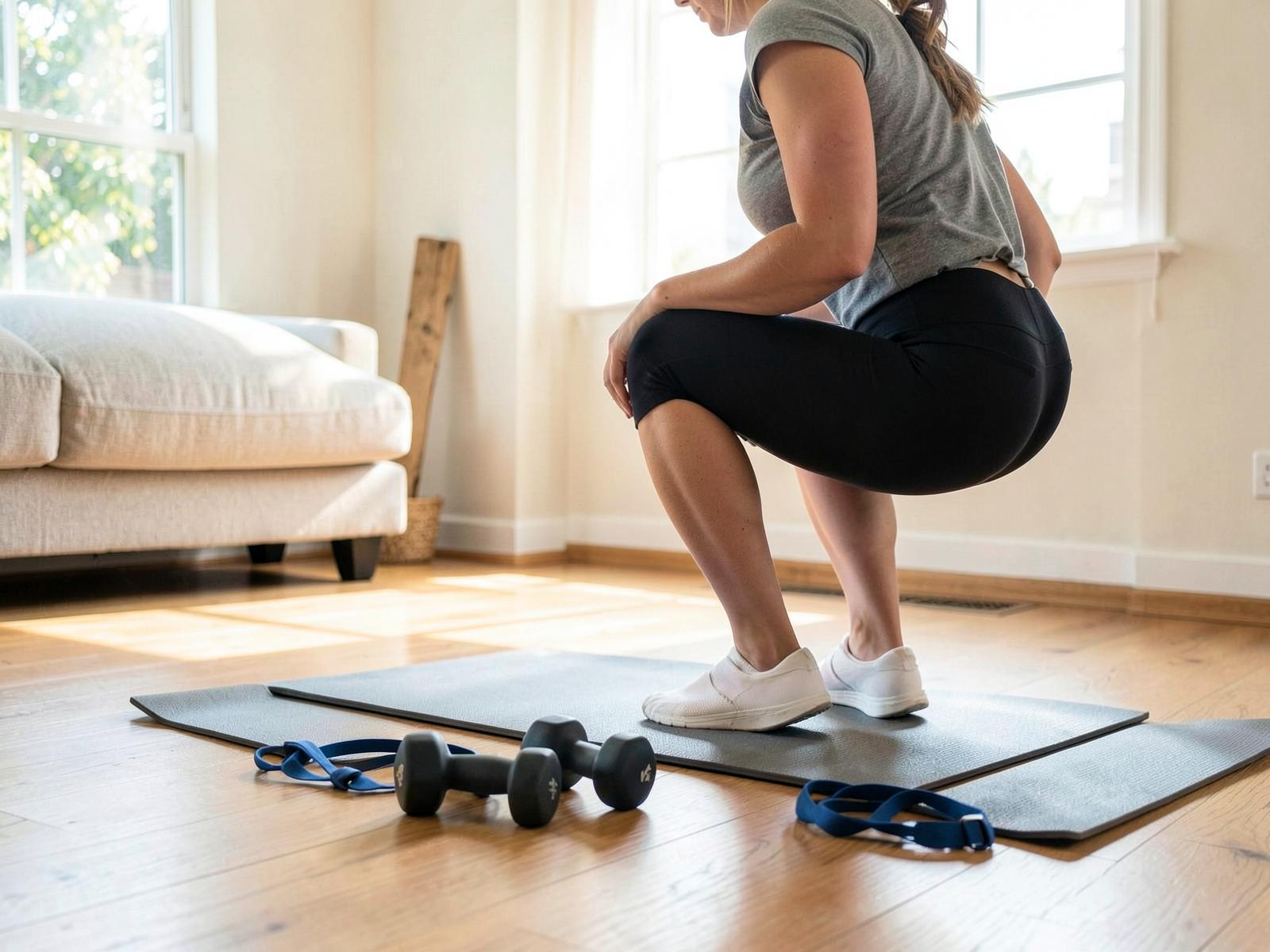
For someone getting started, a few basic movements performed consistently can provide a practical foundation for building strength and becoming more comfortable with resistance exercise.
The goal is not to create the hardest workout possible. It is to establish a routine you can perform safely, repeat consistently, and gradually progress over time.
What strength training means
Strength training involves working your muscles against resistance.
That resistance can come from:
- your own body weight
- resistance bands
- dumbbells
- kettlebells
- weight machines
- household objects
- other forms of external resistance
The equipment matters less than having movements that challenge your muscles appropriately.
Start with basic movement patterns
A beginner routine does not need dozens of exercises.
Instead, think about several broad movement patterns.
Squat or sit-to-stand movements
These involve bending at the hips and knees and can resemble sitting down and standing back up.
Hip-hinge movements
These emphasize movement at the hips and are used in exercises such as deadlift variations.
Pushing movements
Examples include wall push-ups, floor push-ups, or dumbbell presses.
Pulling movements
Rows using bands or weights are common examples.
Carrying and core-control movements
Holding, carrying, and stabilizing resistance can challenge multiple muscle groups at once.
A simple routine built around a few of these patterns can train much of the body without becoming complicated.
Bodyweight exercise is a useful starting point
You do not necessarily need equipment for your first workout.
Exercises might include:
- chair squats
- wall or elevated push-ups
- step-ups
- glute bridges
- controlled lunges
- basic core exercises
Bodyweight movements also make it easier to practice technique before adding external resistance.
As an exercise becomes easier, you can adjust the movement, increase repetitions, slow the tempo, or eventually add resistance.
A little equipment can expand your options
If you decide to add equipment, you do not need to build a complete home gym at once.
A small set of resistance bands or a pair of dumbbells can provide many additional exercise options.
Adjustable dumbbells can be especially useful when space is limited because one set can replace several fixed-weight pairs.
Resistance bands are inexpensive, portable, and easy to store.
Choose equipment based on the exercises you actually plan to perform rather than accumulating gear first and figuring out how to use it later.
How often should beginners strength train?
You do not need to strength train every day.
Many beginners start with a small number of full-body sessions each week and allow recovery time between them.
What matters more than maximizing frequency is establishing a schedule you can maintain.
Two consistent sessions every week are more useful than an ambitious five-day plan that disappears after two weeks.
As experience increases, training frequency and structure can change.
Repetitions and resistance
There is no single repetition range required for everyone.
For a beginner, choose a level of resistance that allows you to perform the movement with control while still making the exercise feel challenging by the end of the set.
Avoid choosing a weight simply because it seems impressive.
You should be able to maintain reasonable technique rather than struggling through every repetition.
Progress gradually
Your body adapts when exercises become appropriately more challenging over time.
Progression can happen in several ways:
- adding a few repetitions
- adding another set
- using slightly more resistance
- improving range of motion
- performing the movement with better control
- choosing a somewhat harder exercise variation
You do not need to progress everything at once.
Small increases can accumulate over time.
Technique comes before load
Adding resistance to a movement you cannot yet control is rarely useful.
Take time to learn each exercise.
Move deliberately. Use a range of motion you can manage comfortably. Avoid rushing simply to finish a set.
Video instruction, a knowledgeable trainer, or qualified professional guidance can be helpful when learning unfamiliar movements.
Make the environment work for you
One advantage of home training is convenience.
You can remove many of the barriers associated with traveling to a gym, but it helps to make your exercise space practical. Our Healthy Home guidance covers more ways to set up everyday spaces.
You may only need enough room to:
- stand comfortably
- extend your arms
- lie on the floor
- store a small amount of equipment
Keeping equipment visible and easy to access can also make it easier to follow through with planned workouts.
Recovery is part of strength training
Strength training creates physical stress. Recovery gives your body time between sessions.
Adequate sleep, regular meals, hydration, and reasonable training volume all contribute to a sustainable routine.
Muscle soreness can occur when you begin a new activity, but severe or persistent pain should not simply be ignored.
A simple beginner structure
A straightforward home session could include:
- one squat or lower-body movement
- one pushing movement
- one pulling movement
- one hip-focused movement
- one core or carrying exercise
You do not need to exhaust yourself.
Start with manageable amounts of work and gradually build from there. Our Building a Simple Home Fitness Routine guide covers how to fit sessions like this into an ordinary week.
When professional guidance may be useful
People with significant injuries, persistent pain, major mobility limitations, or medical conditions affecting exercise may benefit from individualized guidance before beginning or modifying a strength program.
A qualified healthcare or fitness professional can help adapt movements when necessary.
Build a routine before chasing results
Strength develops through repetition and consistency.
The most useful first goal is not lifting a particular amount of weight. It is becoming someone who regularly strength trains.
Choose a few movements. Learn them well. Train consistently. Progress gradually.
A simple routine performed for months can accomplish far more than an elaborate program performed for a week.
Looking for a compact way to add progressive resistance at home? See our guide to the best adjustable dumbbells for home gyms.
If you would rather start with something lighter and easier to store, our guide to the best resistance bands for home workouts compares the main band styles and what each one is good for.