
Healthy home
Creating a Home That Supports Healthy Habits
Healthy habits are often described as a matter of discipline.
By HealthyLivingHub Editorial Team
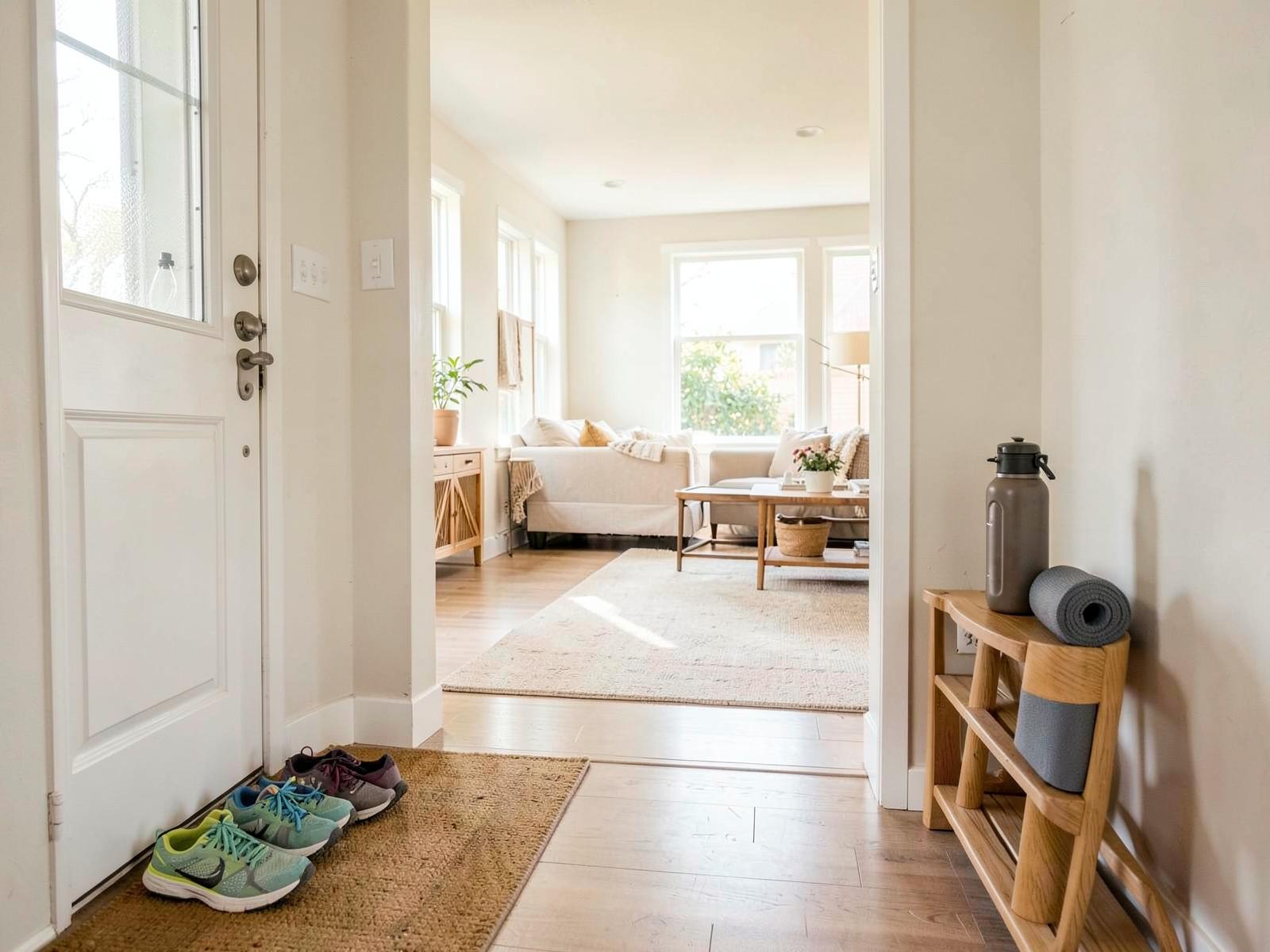
Environment matters too.
The objects you see, the foods within reach, the places you sit, the equipment that is accessible, and the way your home is organized can all influence everyday decisions.
You do not need to redesign your house around wellness.
Small changes can make useful behaviors easier and less useful behaviors less automatic.
Make movement convenient
If exercise requires finding equipment buried in a closet, clearing an entire room, and setting everything up, getting started becomes harder.
Look for ways to reduce those steps.
That might mean:
- keeping walking shoes near the door
- storing resistance bands where they are easy to reach
- leaving a yoga or exercise mat accessible
- creating a small open area for movement
- keeping dumbbells in a convenient location
You do not need a dedicated home gym.
A small amount of usable space may be enough. Our Move section covers simple ways to use it.
Let your home remind you to move
Long periods of sitting can happen without much thought.
Environmental cues can help interrupt them.
For example:
- place frequently used items where you occasionally need to stand up
- take phone calls while walking when appropriate
- keep stairs or outdoor walking routes convenient
- use natural breaks in the day as movement cues
The objective is not constant activity. It is creating more opportunities to move.
Make useful food choices visible
The kitchen strongly influences eating habits.
Foods that are visible and easy to reach are more likely to be used.
You might:
- keep fruit visible
- organize refrigerated produce where you can see it
- keep water easily accessible
- place frequently used healthy staples within reach
- prepare ingredients that otherwise tend to be forgotten
Environment does not replace personal choice, but it can make certain choices easier.
Create a kitchen that is easy to use
Countertop clutter, difficult storage, and hard-to-find tools can make cooking feel like more work than it needs to be.
Keep the equipment you regularly use accessible.
Store ingredients in logical places.
Maintain enough clear workspace to prepare a simple meal.
A functional kitchen makes cooking easier to begin.
Support hydration
A surprisingly simple environmental change is making water convenient.
That might mean:
- keeping a reusable bottle nearby
- placing a glass at your desk
- filling a pitcher for the refrigerator
- carrying water when you leave home
You are more likely to drink something that is readily available.
Give rest its own environment
The bedroom can support the transition from activity to rest.
Consider unnecessary light, noise, temperature, and distractions.
You may find it useful to:
- reduce clutter around the bed
- keep lighting softer in the evening
- limit work materials in the sleeping area
- reduce unnecessary notifications
- make bedding comfortable for your preferences
The goal is not perfection. It is creating fewer obstacles to rest.
Separate spaces when possible
Many homes now serve multiple purposes.
A dining table may also be an office. A bedroom may double as a workspace. A living room may become a workout area.
Perfect separation is not always possible, but small signals can help one space transition between activities.
Putting work materials away at the end of the day or storing exercise equipment neatly after a workout can create a sense of transition.
Reduce unnecessary friction
Every extra step creates another opportunity not to follow through.
If you want to walk regularly, make the shoes easy to find.
If you want to cook more often, keep basic ingredients available.
If you want to stretch, keep enough space to do it.
If you want to sleep more consistently, make the bedroom easier to wind down in.
Good environments make useful behaviors simpler.
Avoid turning your home into a wellness showroom
Healthy living does not require buying endless products.
Fitness equipment, air purifiers, specialty cookware, sleep products, water bottles, storage systems, and other tools can be useful when they solve a specific problem.
They are not requirements.
Start with behavior and environment first.
Then decide whether a product would genuinely make the behavior easier.
Organization can help, but perfection is unnecessary
An organized home can reduce the time spent searching for things and make routines easier.
That does not mean every drawer needs a labeling system.
Focus on functional organization:
- frequently used things are easy to access
- clutter does not block useful spaces
- food is easy to see
- exercise equipment is available
- important routines require fewer setup steps
The purpose of organization is usefulness, not appearance.
Think in terms of defaults
Your environment helps create default behaviors.
A bottle on your desk makes drinking water easier.
Walking shoes beside the door make going outside easier.
Fruit on the counter makes choosing it easier.
A clear exercise area makes movement easier.
None of these guarantees a behavior.
They simply reduce the amount of effort required to begin.
Build around the life you actually live
The best healthy home is not the one that looks best online.
It is the one that supports the routines of the people living in it.
Look for repeated points of friction in your day and ask a simple question:
Could I change the environment so this is easier next time?
Small answers to that question can gradually create a home that supports healthier habits without making healthy living feel like another full-time job.