
Healthy kitchen
Building a Practical Healthy Kitchen
A kitchen does not need expensive appliances, matching containers, or a pantry filled with specialty foods to support healthy eating.
By HealthyLivingHub Editorial Team
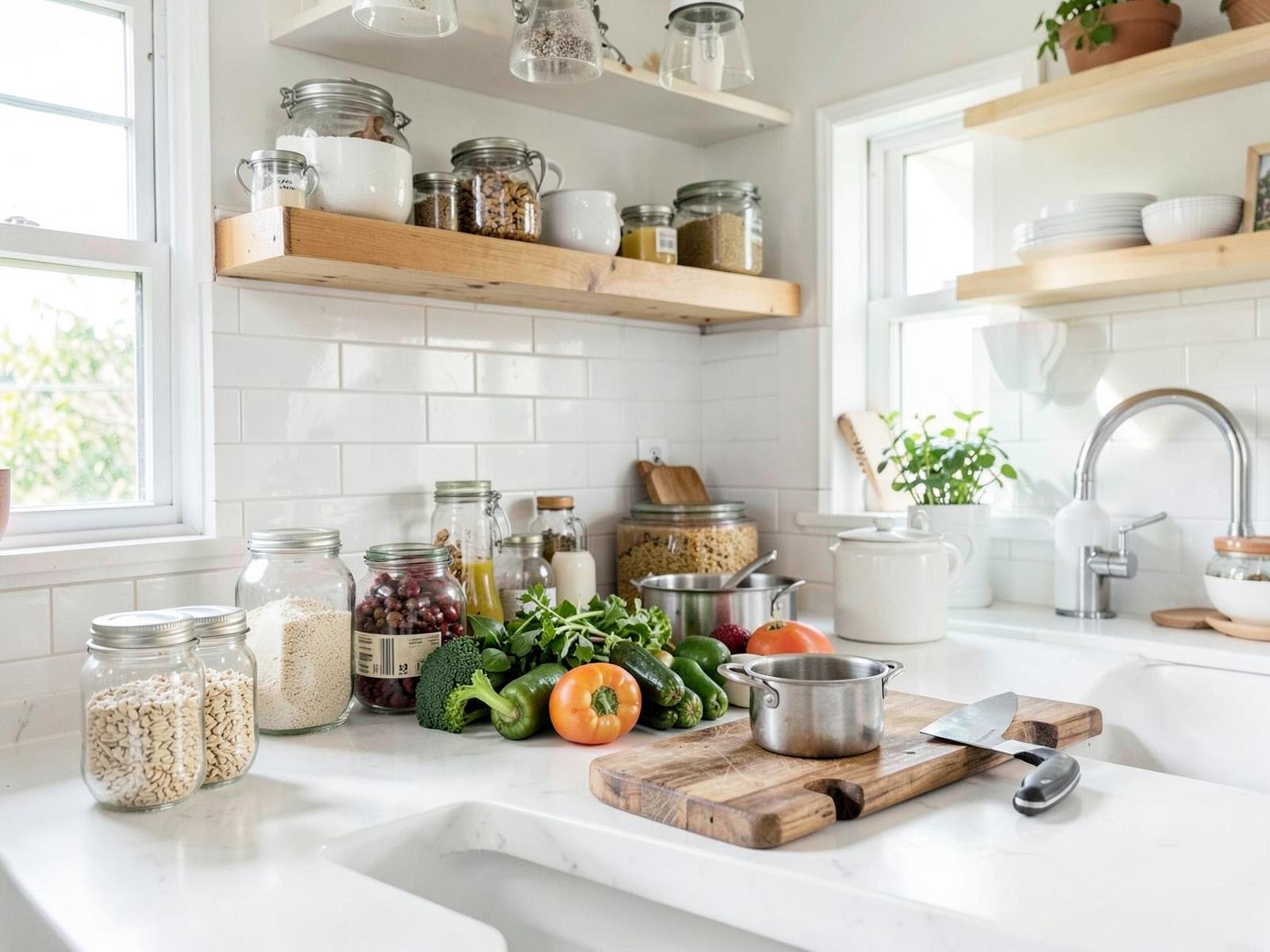
What matters is whether the space makes everyday meals easier to prepare.
A practical kitchen keeps useful ingredients available, makes frequently used tools easy to reach, and reduces the friction between deciding to eat well and actually preparing something.
Start with the foods you actually eat
A well-stocked kitchen should reflect your household.
There is little value in buying ingredients because they appear on a healthy-food list if nobody wants to eat them.
Start with meals you already enjoy and identify ingredients that can be used repeatedly.
Common categories might include:
- vegetables
- fruits
- grains
- beans and legumes
- eggs
- dairy or alternatives
- meat, poultry, seafood, or other proteins
- nuts and seeds
- oils
- herbs and spices
- frozen foods
The specific foods are less important than having ingredients that can be combined into practical meals.
Build a useful pantry
Shelf-stable foods give you options when fresh ingredients are limited.
Depending on your preferences, useful staples may include:
- oats
- rice
- pasta
- canned beans
- canned tomatoes
- whole grains
- nuts
- seeds
- canned fish
- broth
- oils
- vinegar
- herbs
- spices
A pantry should function as a working supply, not a collection of products that expire untouched.
Use the freezer strategically
A freezer can make healthy cooking much easier.
Frozen vegetables and fruit are convenient because you can use only what you need.
The freezer can also hold:
- cooked grains
- bread
- individual portions of meals
- soups
- proteins
- leftovers
Freezing food can reduce waste and provide backup options for days when cooking from scratch is unrealistic.
Keep produce visible
Fresh produce is easier to use when you remember it exists.
Depending on the food, that may mean keeping fruit visible on the counter or organizing refrigerated produce so it does not disappear behind other items.
Consider washing or preparing certain items ahead of time when that makes them easier to use.
The goal is to remove small barriers.
You do not need every kitchen gadget
Kitchen products can be useful, but equipment should solve real problems.
A basic kitchen might rely heavily on:
- a good chef's knife
- cutting board
- skillet
- saucepan
- larger pot
- sheet pan
- mixing bowls
- storage containers
- measuring tools
Depending on how you cook, appliances such as a blender, slow cooker, pressure cooker, toaster oven, or air fryer may also be useful.
Buy equipment because you know what you will do with it, not because it promises to transform your eating habits.
A blender can be useful, but it is not essential
Blenders are often associated with smoothies, but they can also be used for:
- soups
- sauces
- dressings
- dips
- purees
If those foods are already part of your routine, a blender may earn its storage space. Our guide to the best blenders for smoothies and everyday healthy eating explains how the formats differ.
If not, there is no requirement to own one simply because you are trying to eat well.
Organize for frequency
Keep frequently used items where they are easiest to reach.
You might place everyday cookware near the stove, cutting boards near your preparation area, and commonly used ingredients together.
You do not need a perfectly organized kitchen.
The objective is to reduce unnecessary steps.
Storage can reduce food waste
Good storage helps you see what you have and use food before it spoils.
Clear containers can make leftovers easier to identify.
Labeling prepared foods or freezer items can help when several containers look similar.
A simple “use first” section in the refrigerator can also remind you which ingredients need attention.
Reducing food waste saves money and makes meal planning easier.
Keep backup meals available
Every household has nights when the original meal plan falls apart.
A useful kitchen includes backup options.
That might be:
- frozen vegetables with rice and eggs
- pasta with vegetables and sauce
- soup and a sandwich
- beans with grains and toppings
- a frozen portion of a meal prepared earlier
Backup meals do not need to be impressive. They simply need to be easier than abandoning the kitchen altogether.
Clean as part of the routine
A kitchen is easier to use when the workspace is reasonably clear.
You do not need perfection.
Putting away ingredients, loading the dishwasher, wiping a preparation surface, or washing a pan immediately can make the next meal easier to start.
Kitchen maintenance is part of reducing friction.
Build the kitchen around your habits
A healthy kitchen is not defined by a particular countertop appliance or pantry aesthetic.
It is a space that makes the foods you want to eat easier to prepare.
Stock foods you use. Keep essential tools accessible. Organize enough to know what you have. Reduce waste where possible.
A practical kitchen supports healthy habits quietly, meal after meal.