
Home fitness
Building a Simple Home Fitness Routine
A useful home fitness routine doesn't need to be complicated. Start with the space, time, movements, and equipment you can realistically use — then build consistency from there.
By HealthyLivingHub Editorial Team
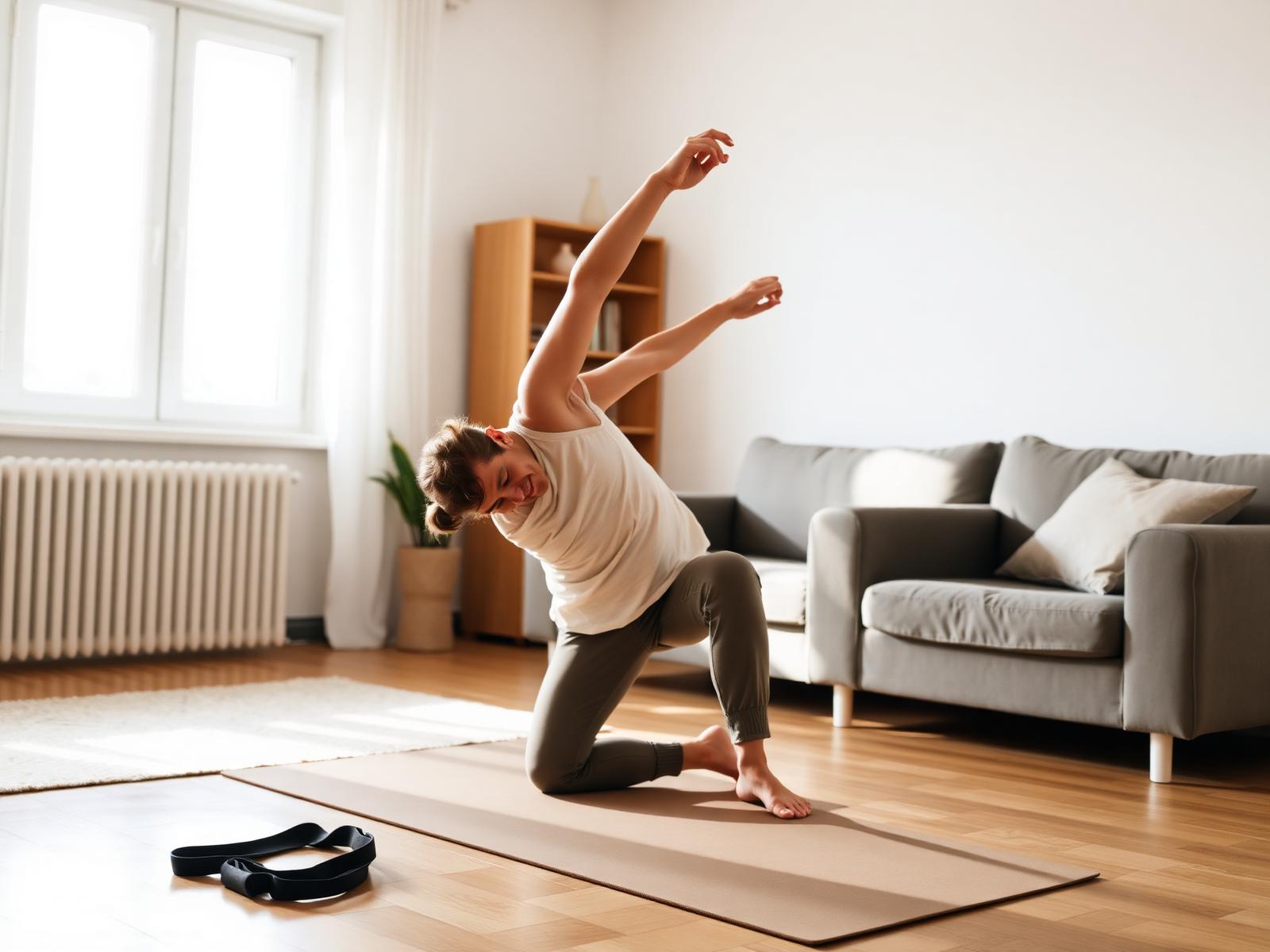
Exercising at home works for a lot of people for a simple reason: it removes friction. There is no travel time, no waiting for equipment, and no need to organise your day around opening hours. When movement is only a few steps away, it becomes far easier to fit into an ordinary week.
It also helps to be clear about the goal. The aim is not to design the perfect programme. The aim is to build something you can actually repeat — a routine that survives busy weeks, changes of plan, and the days when motivation is low.
What follows is a practical way to think about putting that routine together: what to consider before you start, how to keep the structure simple, and how to adjust it as your circumstances change.
Start with what you can realistically maintain
Before choosing exercises, it helps to take an honest look at where you are starting from. A routine built around your real week is much more likely to last than one built around an ideal week that rarely happens.
A few questions worth answering first:
- How active are you at the moment, and how does your body usually respond to activity?
- How much time do you genuinely have — not on your best week, but on an average one?
- Where in your home could you move comfortably and safely?
- What kinds of movement do you actually enjoy, or at least not dread?
- How often could you repeat this without rearranging your life around it?
Beginning conservatively is rarely a mistake. Two or three shorter sessions a week, done consistently for a month, tend to teach you far more about what works than an ambitious six-day plan abandoned after the first busy week. Once something feels routine rather than effortful, you can add a little more.
Think in movement categories, not complicated workouts
One of the easiest ways to simplify home fitness is to stop thinking in terms of workouts and start thinking in terms of broad categories. A balanced routine usually touches on a few of them across the week, in whatever combination suits you.
Everyday movement
The activity that happens outside anything you would call exercise still counts, and for many people it makes up the largest share of their weekly movement.
- Walking, indoors or outdoors
- Taking the stairs when it is practical
- Short movement breaks during long stretches of sitting
- Household activity such as tidying, gardening, or carrying shopping
Strength
Strength work at home can be built from a small number of familiar patterns rather than a long exercise list.
- Squats or sit-to-stands from a sturdy chair
- Pushing movements, such as press-ups against a wall, a bench, or the floor
- Pulling movements where suitable equipment is available
- Hip-hinge patterns, which train the back of the body
- Carrying — holding something with weight and walking with it
- Simple resistance exercises using bands or dumbbells
Mobility
Gentle range-of-motion work, stretching, and a few minutes of movement preparation before a session can make activity feel more comfortable. Many people find short, frequent mobility work easier to maintain than occasional long sessions.
Recovery
Easier days and rest days belong in the plan rather than being treated as gaps in it. Recovery is part of what makes a routine sustainable, and building it in from the start avoids the pattern of pushing hard for two weeks and then stopping entirely.
How much of each category you include depends on your starting point, your preferences, and what your week allows. There is no single correct distribution, and specific sets, repetitions, or intensity targets are best decided by you — or with a qualified professional if you are unsure.
Build a simple weekly framework
A loose weekly shape gives you something to follow without having to decide from scratch every day. The example below is an illustration of how the categories can be spread across a week — not a prescription, and not a plan that will suit everyone.
- Monday — Strength-focused home session
- Tuesday — Walking or everyday movement
- Wednesday — Mobility or lighter activity
- Thursday — Strength-focused home session
- Friday — Walking or everyday movement
- Weekend — Flexible activity, recreation, walking, or recovery
Frequency and intensity should reflect your own starting point, schedule, health, and circumstances. Someone returning to activity after a long break, someone with a physically demanding job, and someone who already walks several miles a day will all reasonably arrive at different versions of this.
Choose a space that makes starting easy
A home workout area does not need to be a dedicated gym, a spare room, or anything that looks impressive. It needs to be somewhere you can begin without a ten-minute setup.
- Enough clear floor space to move through a full range of motion safely
- Easy access to the equipment you use most often
- Minimal setup — the fewer steps between deciding and starting, the better
- Visible cues, such as leaving walking shoes or a mat where you will see them
- No clutter in the way that makes moving inconvenient or unsafe
This is the same idea that runs through our Healthy Home guidance: your environment quietly decides how much effort a habit requires. Arranging a corner of a room so that starting takes seconds rather than minutes does more for consistency than most changes to the routine itself.
Equipment: start with less
Bodyweight movement is enough to begin with for many people. Equipment is worth adding when it solves a specific problem — when it makes a movement possible, more comfortable, or easier to repeat — rather than because it is available.
Categories that tend to earn their place in a home setup:
- Resistance bands — light, easy to store, and useful for both strength and mobility work
- Adjustable dumbbells — several resistance levels without a full rack of weights
- An exercise or yoga mat — a more comfortable surface for floor-based movement
- A walking pad or treadmill — worth considering when weather, safety, or schedule genuinely limit outdoor walking
Our buying guides evaluate equipment on usefulness, practicality, and value rather than volume of recommendations. If you are weighing up bands, start with our guide to the best resistance bands for home workouts. For recovery between sessions, see our guide to the best foam rollers for home recovery.
Make consistency easier
Most of the difficulty in home fitness is not the exercise itself — it is starting on days when nothing is stopping you except inertia. A few practical adjustments can help, though none of them work for everyone.
- Choose a regular time, so the decision is already made
- Attach movement to something you already do, such as a walk after lunch
- Reduce setup — keep the mat unrolled or the bands within reach
- Track whether you did the session, not how well it went
- Keep a shorter fallback version for busy days, so a compressed session replaces a skipped one
Treat these as experiments rather than rules. If a particular approach is not helping after a few weeks, it is reasonable to drop it and try something else.
Know when to adjust
A routine is not meant to be permanent. Schedules change, seasons change, and what felt manageable in one period may not suit the next. Reviewing your routine every so often — and adjusting gradually rather than rebuilding it — keeps it useful.
If you experience persistent pain, unusual symptoms, significant physical limitations, or you are simply unsure what kind of activity is appropriate for you, it is worth speaking with a qualified healthcare or fitness professional before continuing.
A simple way to begin
If you would rather not plan much at all, this is a reasonable starting sequence:
- Choose two or three realistic movement days.
- Decide where you will exercise.
- Choose a few basic movement categories.
- Start with equipment you already own, or none at all.
- Repeat the routine long enough to learn what actually works for you.
- Adjust gradually rather than rebuilding the entire plan every week.
Healthy living rarely depends on creating the most complicated plan. A simple routine that fits your life gives you something far more useful: a place to start and a structure you can continue building on.
Keep exploring Move
Walking for Everyday Fitness: Getting More Movement Into Your Day
In development
Strength Training at Home: A Practical Beginner's Guide
In development
- Best Walking Pads for Home & Office
- Best Adjustable Dumbbells for Home Gyms
- Best Resistance Bands for Home Workouts