
Buying guide
Best Blenders for Smoothies and Everyday Healthy Eating
The right blender depends less on the biggest motor and more on what you blend, how much of it, and where the machine will live between uses.
By HealthyLivingHub Editorial Team
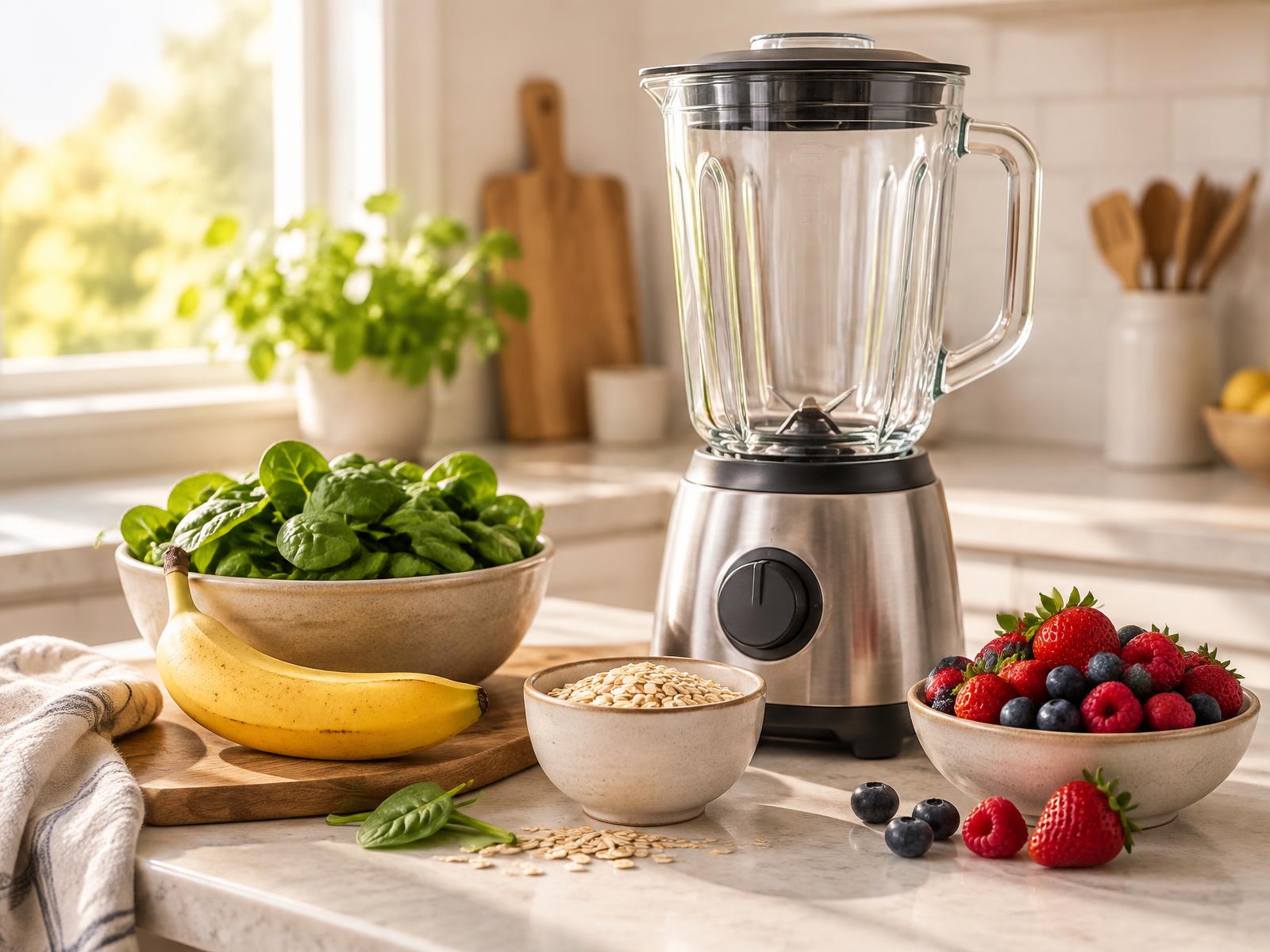
A blender is not a requirement for eating well. It is simply a kitchen tool that can make certain foods and routines easier, and whether it earns its counter space depends on what you actually make.
Someone blending one smoothie each morning has different requirements from a household preparing larger batches, frozen-fruit drinks, sauces, dips, and soups. Capacity, container design, controls, motor, cleaning, and storage footprint all follow from that.
This guide compares five machines chosen to represent five different buying situations rather than five versions of the same appliance. Recommendations are based on current manufacturer specifications, product design, and practical fit for the intended use. HealthyLivingHub has not personally tested these products.
Our picks at a glance
Best Overall
A full-size variable-speed machine built around a 64-ounce container and broad everyday kitchen use.
Best Value
Ninja Professional Plus Kitchen System BN801
A multi-vessel system with a pitcher, single-serve cups, a processor bowl and preset programs.
Best for Smoothies
Breville the Fresh & Furious (BBL620)
A conventional countertop blender with one-touch Smoothie, Green Smoothie and Ice Crush programs.
Best Personal Blender
A compact 900-watt single-serving blender with twist-on cups and a small footprint.
Best for Everyday Versatility
A conventional countertop blender with a variable-speed dial, three preset programs and a self-clean cycle.
How we selected these blenders
These are research-based recommendations. We did not run kitchen tests, score the machines numerically, or invent a rating methodology. Instead we compared current manufacturer documentation and looked at how each machine fits a specific everyday situation.
The factors we weighed were:
- blender format, from personal cups to full-size pitchers to multi-vessel systems
- container capacity and shape
- suitability for smoothies, including frozen and fibrous ingredients where the manufacturer supports them
- control options, whether variable speed, presets, or both
- versatility beyond drinks
- included accessories and what they add
- countertop footprint and storage requirements
- cleaning effort, including self-clean cycles and dishwasher-safe parts
- published manufacturer specifications
- practical fit for the intended use
Specifications change. Confirm current details on the manufacturer or retailer page before buying.
Best Overall: Vitamix 5200
The Vitamix 5200 is the pick for a household that wants one serious full-size blender for smoothies plus broader everyday kitchen work.
Vitamix lists a 64-ounce classic container, a 2 peak horsepower motor, laser-cut stainless-steel blades, 10 variable speeds plus a high-speed setting, a self-cleaning routine using warm water and dish soap, and an included classic tamper for thick mixtures. Vitamix documents a 7-year full warranty for this model.
Why we selected it
- large 64-ounce container suited to medium and large batches
- variable-speed dial that can be adjusted mid-blend for texture control
- tamper for pushing thick mixtures into the blades
- durable container and blade system with a long published warranty
- broad range of documented uses beyond smoothies
Tradeoffs
This is not an inexpensive machine and it is a substantial countertop appliance. The tall container may not fit under some wall cabinets, and for occasional single-serving smoothies it is considerably more blender than the job requires.
Best for: Households that want one full-size blender for smoothies and general everyday food preparation.
Best Value: Ninja Professional Plus Kitchen System BN801
The BN801 is for shoppers who want a lot of functionality without moving into premium full-size blender pricing.
Ninja specifies a 1400 peak-watt motor, a 72-ounce Total Crushing pitcher with a 64-ounce maximum liquid capacity, two 24-ounce single-serve cups with spout lids, a 64-ounce Precision Processor bowl rated for chopping, purees and up to 2 pounds of dough, and five Auto-iQ preset programs covering smoothies, ice crushing, extractions, chopping and dough, alongside low, medium, high and pulse manual controls.
Why we selected it
- one motor base serving a pitcher, to-go cups and a food-processing bowl
- presets for common tasks alongside manual speeds
- large pitcher for household-size batches
- single-serve cups for individual smoothies without filling the pitcher
- considerable functionality relative to its position in the market
Tradeoffs
A multi-component system needs somewhere to live. Several vessels, lids and blade assemblies mean more storage and more washing than a single-jar blender, and some households end up using only one or two of the parts.
Ninja sells a number of similar-looking blenders and kitchen systems. Confirm the listing is the BN801 rather than another Professional, Detect, Foodi or Kitchen System model before buying.
Best for: Households that value versatility and included accessories and have room to store the full system.
Best for Smoothies: Breville the Fresh & Furious (BBL620)
If smoothies are the main reason you are buying a blender, the Fresh & Furious is built around exactly that job.
Breville documents nine task controls with a timer and illuminated one-touch Smoothie, Green Smoothie and Ice Crush programs, an LCD display that counts up on speed settings and down on preset programs, stainless-steel blades, a BPA-free jug, and dimensions of 6.9 by 8.3 by 17.7 inches. Breville describes the machine as combining blending with some food-processing tasks.
Dedicated programs are a convenience feature. They make a repeatable result easier to reach without watching the jug, but a preset does not change the nutritional content of what you put in.
Why we selected it
- one-touch programs aimed specifically at smoothies and green smoothies
- timer and display for repeatable results
- conventional countertop format with a full-size jug
- shorter overall height than some full-size machines
- blending plus some food-processing tasks in one jug
Tradeoffs
Someone who wants maximum heavy-duty versatility will likely prefer a larger machine, and someone who blends a single cup a day will find a personal blender simpler to clean and store.
Best for: Someone who makes smoothies frequently and wants dedicated one-touch programs in a conventional countertop blender.
Best Personal Blender: NutriBullet Pro 900
The NutriBullet Pro 900 is the compact alternative to everything above: a single-serving machine that blends into the cup you drink from.
NutriBullet specifies a 900-watt motor base, an extractor blade, two 32-ounce cups with to-go lids, cup rings and handled lip rings, overall dimensions of 12.01 by 7.72 by 15.94 inches, a weight of 4.7 pounds, and cups and lids that are top-rack dishwasher safe. Configurations vary, so check what is included in the specific listing.
Why we selected it
- small footprint that fits on a crowded counter
- blend-and-go cups that remove the pour-and-wash step
- push-and-twist operation with no settings to learn
- quick cleanup with dishwasher-safe cups and lids
- sensible choice when smoothies are the only real use case
Tradeoffs
Personal blenders are not substitutes for a large pitcher. Batch cooking, big-family smoothies, and larger soup or sauce volumes are outside what this format is designed to do.
Best for: Individuals mainly making single-serving smoothies who value compact storage and straightforward operation.
Best for Everyday Versatility: KitchenAid K400 Blender
The K400 sits between the smoothie specialist and the premium full-size machine: a general-purpose countertop blender for households that blend a bit of everything.
KitchenAid documents a three-part blending system built around a 1.5 peak horsepower motor with Intelli-Speed motor control, an asymmetric stainless-steel blade that cuts at four angles, and a ribbed jar that folds contents back into the blade. Controls are a 5-speed variable dial with pulse, three preset recipe programs for Ice Crush, Icy Drinks and Smoothie, and a self-clean cycle. A Soft Start feature begins the motor slowly to limit splatter. Jar size depends on the configuration you buy, and some K400 sets add personal and small-batch jars.
Why we selected it
- variable-speed dial plus presets covers both deliberate and one-touch use
- self-clean cycle reduces the everyday cleaning friction
- conventional jar shape suited to smoothies, sauces and dips
- optional personal and small-batch jars in some configurations
- a balanced choice when smoothies are one job among many
Tradeoffs
It takes up more counter and cupboard space than a personal blender, and it is unnecessary for someone who makes only the occasional single serving. KitchenAid sells several blender families, so confirm the listing is the K400 rather than the K150 or another line.
Best for: Households wanting a conventional countertop blender that handles smoothies as part of broader everyday food preparation.
Full-size blenders, personal blenders and kitchen systems
Full-size blenders
A full-size jug suits larger batches and broader kitchen use: several servings at once, sauces, dips, and soups where the manufacturer supports hot ingredients. The tradeoff is a bigger footprint and a jug you have to pour from and wash.
Personal blenders
A personal blender is smaller, quicker to clean, and convenient for individual servings because you blend in the cup you drink from. Capacity is limited and some applications, including hot ingredients in sealed cups, are restricted by the manufacturer.
Kitchen systems
A kitchen system pairs one motor base with several vessels, often including a food-processing bowl. That adds genuine versatility, and it also adds parts to store and wash. It suits people who will use more than one of the attachments.
Wattage is not the whole story
Wattage and peak horsepower are easy numbers to compare and incomplete measures of how a blender performs. Container shape, blade design, how the contents circulate, control options, and whether a tamper is included all affect the result. Manufacturers also measure and describe motor output differently, so treat the figures as one input rather than a ranking.
What to consider before buying
What you will actually blend
Frozen fruit, ice, leafy greens, nuts, and dates ask more of a machine than soft fruit and liquid. Check the manufacturer's guidance for the ingredients you use most.
How much at a time
One cup a day and four servings at a weekend lead to different machines. Note that pitcher capacity and maximum liquid capacity are often different numbers.
Controls
A variable dial gives fine control over texture. Presets give repeatability without attention. Some machines offer both.
Footprint and storage
Measure the height under your wall cabinets before buying a full-size machine. A blender that has to be lifted out of a cupboard each morning often stops being used.
Cleaning
Self-clean cycles, dishwasher-safe parts, and removable blades all reduce daily friction. This matters more than it sounds for a machine you intend to use every day. Our guide to a practical healthy kitchen covers the same idea across the rest of the kitchen.
Noise
Powerful blenders are loud. If you blend early in the morning in a shared home, that is worth factoring in.
Smoothie and everyday kitchen considerations
A blender does not make food healthy on its own. What goes into the jug matters far more than the machine, and a smoothie is simply one convenient way to eat foods you might otherwise skip.
Where a blender can help is friction. If it makes breakfast faster on a busy morning, or turns leftover vegetables into a soup instead of waste, it is doing useful work. Our article on how to make healthy eating easier looks at that idea in more depth.
A few practical notes for smoothies: liquid usually goes in first, frozen ingredients blend more predictably in smaller pieces, and filling a jug to the brim tends to produce a worse result than leaving room for circulation. Blended drinks also count toward your fluid intake, which our guide to hydration basics puts in context.
Blending hot ingredients
Hot ingredients produce steam, and steam in a closed container produces pressure. That pressure can force the lid or contents out when the container is opened or when the machine starts.
Blender designs differ. Some full-size machines are documented for hot preparations with specific instructions about fill levels and vented lids. Sealed personal-blender cups are frequently restricted against hot or carbonated ingredients entirely.
Follow the instructions for the exact machine you own rather than a general rule from elsewhere. If the manufacturer does not state that your configuration is designed for hot liquids, do not assume it is.
Cleaning and care
- rinse or run the cleaning cycle soon after blending, before residue dries
- follow the manufacturer's instructions on which parts are dishwasher safe
- never put the motor base in water
- handle blades carefully; they stay sharp whether or not the machine is running
- check gaskets and seals periodically and replace worn parts
- dry containers fully before storing them sealed
Frequently asked questions
What type of blender is best for smoothies?
Any of these formats can make a smoothie. A personal blender is simplest for one serving, a full-size machine suits several servings, and a smoothie-focused machine adds one-touch programs for a repeatable result.
Is a personal blender enough for everyday use?
If your everyday use is one or two individual drinks, usually yes. If you also want soups, large batches, or food-processing tasks, a personal blender will feel limiting.
Do you need a high-powered blender for frozen fruit?
Not necessarily. Many mid-range machines handle frozen fruit when it is cut small and paired with enough liquid. Check the manufacturer's guidance, since some machines specifically restrict hard frozen ingredients or ice.
What is the difference between a personal blender and a full-size blender?
Personal blenders blend into a drinking cup, hold a single serving, and store easily. Full-size blenders use a larger jug, handle bigger batches and a wider range of preparations, and take up more space.
Can you blend hot ingredients?
It depends entirely on the machine. Some full-size blenders document hot preparations with specific instructions; sealed personal cups are often restricted against them. Follow the manual for your model.
What should you look for if you make smoothies frequently?
Easy cleaning, a container size that matches your usual serving, controls you will actually use, and a machine that can stay on the counter. Daily use rewards convenience more than headline specifications.
Our bottom line
For a household that wants one capable full-size machine, the Vitamix 5200 offers the strongest combination of capacity, control and documented durability, at a price that reflects that.
The Ninja BN801 delivers the most functionality per dollar if you have the storage for it, while the Breville Fresh & Furious is the more focused choice for frequent smoothie making.
The NutriBullet Pro 900 is the practical answer for one person and one cup a day, and the KitchenAid K400 is the balanced everyday option for households blending a bit of everything.
The best blender is the one that matches what you blend, how much of it, and where it can live between uses.
Sources & methodology
Specifications in this guide are drawn from current manufacturer product pages and documentation. HealthyLivingHub has not personally tested these models. Manufacturer specifications and configurations change, so confirm current details on the manufacturer or retailer page before purchasing.